
Epic

Seven days to the foot of the sacred 7,326 m peak — over the Nyile La pass at 4,930 m, through yak pastures, blue-sheep country and the high hamlet of Lingshi.
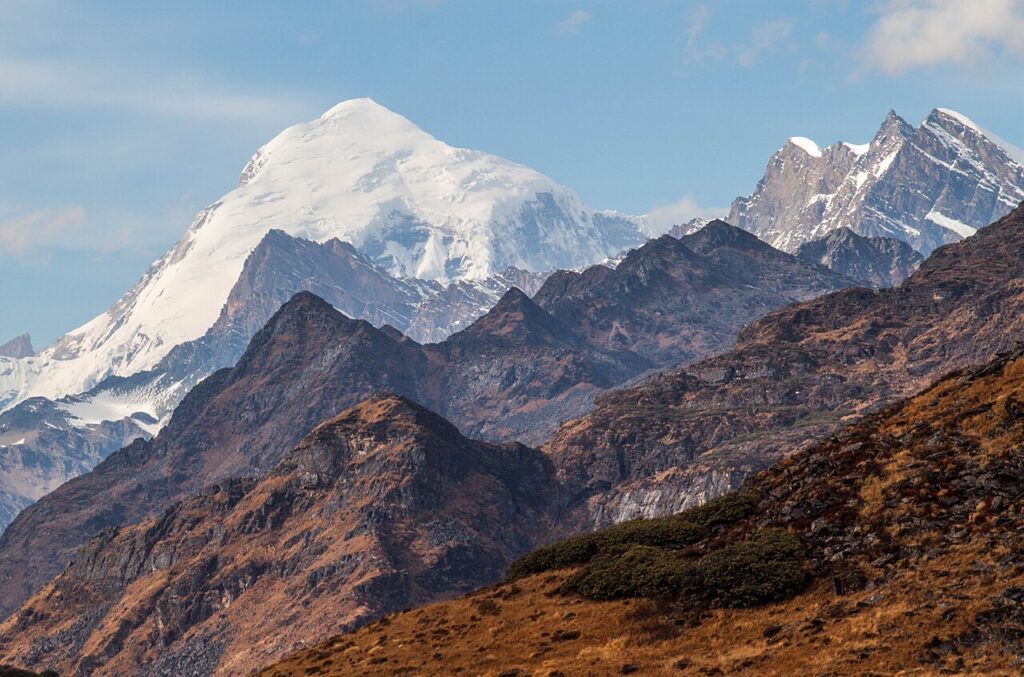
Jomolhari is the mountain Bhutan keeps in its heart — a 7,326 m throne of the goddess Jomo, rising in a single unbroken wall above the meadows of Jangothang. This is the classic route to its foot: seven days that climb out of the pine forests above Paro, follow the Paro Chhu upstream past prayer walls and grazing yaks, and camp beneath the peak itself while blue sheep work the slopes above.
It is a real high-mountain trek, not a stroll. You cross the Nyile La at 4,930 m, sleep six nights under canvas, and spend a full day acclimatising at Jangothang before going higher. In return you walk through some of the least-travelled country in the Himalaya — yak herders’ camps, the fortress ruins of Lingshi, and mornings when the whole valley turns pink before the sun clears the ridge.
We run it Bhutanese-led and small — never more than a dozen walkers — with a licensed guide, a camp cook, and pack ponies to carry the loads. You carry a day pack; we carry the rest.
A short drive up the Paro valley to the roadhead at Sharna Zampa, where the ponies are loaded and the trail begins. An easy first afternoon following the Paro Chhu through blue-pine forest, easing you into the rhythm of the walk before the real climbing starts.
A long, steady day gaining height along the river, crossing side-streams on log bridges and climbing through rhododendron and fir. The forest thins toward camp, and on a clear evening Jomolhari shows itself for the first time above the meadow at Thangthangka.
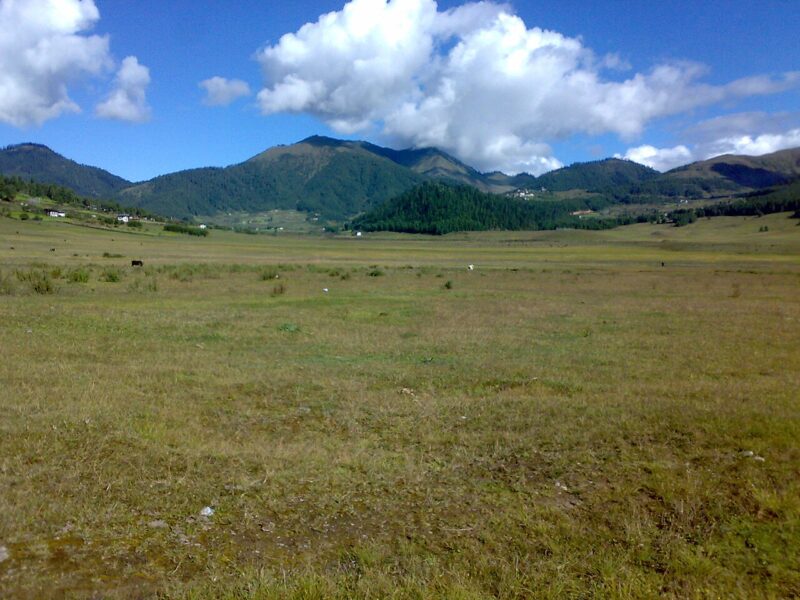
Above the treeline now, into open yak country. You pass an army checkpost, the small settlement of Soe, and grazing herds before the trail opens onto the broad meadow of Jangothang, where a ruined fortress sits directly beneath the mountain. Camp under the peak itself.
A day to let your body catch up with the altitude. Walk high and sleep low: a day-hike up toward the twin Tshophu lakes, with the chance to spot blue sheep on the crags and, if the goddess is willing, a clear line on Jomolhari and neighbouring Jichu Drake. Back to the same camp for the night.
The big day. A long climb to the Nyile La at 4,930 m — the high point of the trek — with the whole Himalayan skyline opening behind you. A knee-testing descent brings you down toward Lingshi, its dzong perched on a knoll above the valley, where you camp among yak pastures.
Leaving Lingshi behind, the trail contours through high summer grazing and over a smaller pass before dropping steadily toward the Thimphu Chhu. Camp at Shodu, where the valley narrows and the mountains close in on either side.
The last walking day follows the river down through forest, past the ruined dzong at Barshong, to the roadhead. From there a drive brings you into Thimphu — a hot shower, a proper bed, and the strange quiet of a city after a week in the high country.
April and May, then October, are the windows the goddess keeps clearest. Spring brings rhododendron in bloom and long views before the summer haze; October arrives after the monsoon has washed the air, with firm trails, cold nights and the sharpest chance of a cloudless Jomolhari at dawn. We avoid the wet months of June to August, when the high passes turn to mud.
Tell us how much time you have and how high you’d like to stand. We’ll send back a tailored route — usually within two days.